
What Is Inflation? 7 Essential Facts Made Easy
What is inflation? Inflation is the general rise in prices over time, which means each unit of money buys a little less than it did before. If a basket of everyday goods costs more this year than last year, that is inflation at work. It affects wages, savings, borrowing and almost every household budget. This guide explains what is inflation, what causes it, how it is measured and what it can mean for ordinary people. It is general information, not financial advice.
Table of Contents
What Is Inflation in Simple Terms?
Imagine a loaf of bread that costs a certain amount today. If the same loaf costs more next year, and many other prices rise as well, the purchasing power of your money has fallen. Economists look at the average change across a wide range of goods and services, not a single price, and many central banks aim for inflation of around two percent a year. Deflation is the opposite, a general fall in prices. That is the basic answer to what is inflation.
What Causes Inflation?
Inflation usually comes from a mix of forces:
- Demand-pull inflation: demand for goods and services grows faster than supply, so prices rise.
- Cost-push inflation: the costs of production, such as energy, materials or wages, rise and businesses pass them on.
- Money and credit: when the amount of money in the economy grows much faster than output, prices can rise over time.
- Expectations: if people and firms expect prices to rise, they may raise wages and prices in advance, which keeps inflation going.
Shocks such as supply chain disruptions or sudden jumps in energy prices can push inflation up quickly. Our article on oil prices and global inflation looks at one example of how energy costs spread through the economy.
How Is Inflation Measured?
Statistics agencies track the cost of a typical basket of goods and services and publish it as a price index. The best-known measure in many countries is the consumer price index, or CPI, which follows what households pay for items such as food, housing, transport and clothing. The yearly change in the index is the headline inflation rate. Some agencies also publish core inflation, which leaves out volatile items like food and energy. In the US, the Bureau of Labor Statistics publishes the CPI.
How Inflation Affects Everyday Life
Higher inflation can reduce the real value of savings held in cash, make shopping and bills more expensive, and squeeze households whose income does not keep up. Borrowers with fixed-rate debt can benefit because they repay with money that is worth less, while lenders and savers can lose out if interest rates do not keep pace. Businesses face higher input costs and must decide whether to raise prices.
How Central Banks Respond to Inflation
Central banks try to keep inflation stable, often near a target. When inflation runs too high, they may raise interest rates to make borrowing more expensive and cool demand. When it is too low, they may cut rates to support spending. Our explainer on the Fed interest rate decision shows how these choices can affect markets and investors.
Ways People Respond to Inflation
- Review your budget and track which categories are rising fastest.
- Compare prices and consider alternatives for large purchases.
- Check whether your savings account interest keeps up with rising prices.
- Think about long-term goals and speak to a qualified adviser before making big financial decisions.
Read our disclaimer for more on the general nature of our content.
Inflation Terms Worth Knowing
A few words come up again and again in news about prices, and knowing them makes the topic easier to follow.
- Disinflation: prices still rise, but more slowly than before.
- Deflation: a general fall in prices, which is different from a one-off sale.
- Core inflation: a measure that leaves out food and energy, whose prices move around a lot.
- Purchasing power: how much a unit of money can buy.
- Real wages: pay after allowing for rising prices.
- Cost of living: what it takes to pay for housing, food, transport and other basics.
A Simple Example of What Is Inflation Doing to Your Money
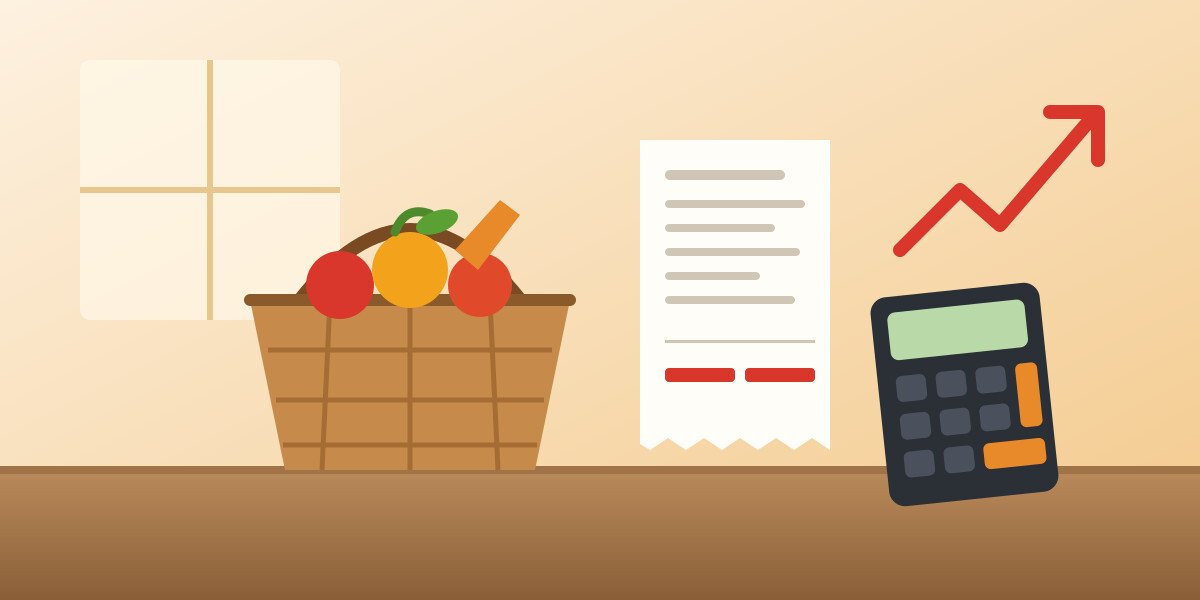
Imagine a basket of groceries costs 100 this year. If prices rise by 3 percent, the same basket costs 103 next year. Your income may not rise by the same amount, so you can buy a little less with it. Over several years the gap grows, which is why a small yearly rate still matters. This simple picture shows what is inflation in everyday terms: the same money, slowly buying less.
Why Prices Do Not Rise Evenly
Inflation is an average, and not every price moves at the same speed. Energy and food can jump quickly, while some electronics become cheaper over time. Rent and services often rise more slowly but steadily. That is why your personal experience can differ from the headline number. If you spend more on rent and fuel, your own rate may be higher than the official figure. Our report on oil prices and inflation shows how one input can move many prices.
Inflation and Savings
When prices rise, cash that sits idle loses purchasing power. A savings account that pays less than the inflation rate gives a negative real return, even though the balance looks bigger. This does not mean you should stop saving. It means you should compare the interest you earn with the rate of price growth, and keep money you need soon in safe, accessible places. Building an emergency fund is still sensible, and long-term savings can use compound interest to grow faster than prices over time.
Inflation and Interest Rates
Central banks watch inflation closely and often raise interest rates to cool demand when prices rise too fast. Higher rates make loans more expensive and can slow spending. When inflation falls back, rates may be lowered. You can follow this link in our coverage of the Fed rate decision. For official data and explanations, the US Bureau of Labor Statistics CPI page is a reliable place to start.
Simple Habits That Help When Prices Rise
- Track your spending for a month to see where the pressure is greatest.
- Compare prices and consider store brands for regular items.
- Review subscriptions and bills once a year.
- Avoid carrying high-interest debt, because it becomes harder to repay.
- Ask for pay reviews with real wages in mind.
This article is general information and not personal financial advice.
Put simply, what is inflation? It is the steady rise in the general level of prices, which lowers what each unit of money can buy. When people ask what is inflation doing to their budget, the best answer is to compare their income and savings rates with the rate of price growth. If you are still wondering what is inflation and whether it matters for you, track a few regular purchases for a few months and see the change yourself.
What Is Inflation? FAQ
Is some inflation normal?
Yes. Many economies aim for low, stable inflation rather than zero, because it gives central banks room to respond to downturns.
What is the difference between inflation and a price rise?
A price rise affects one item. Inflation is a broad, sustained increase in the general price level.
Can inflation be good?
Mild inflation can support spending and investment, but high or unpredictable inflation harms purchasing power and planning.


One Comment