Compound Interest: 5 Proven Ways It Builds Wealth
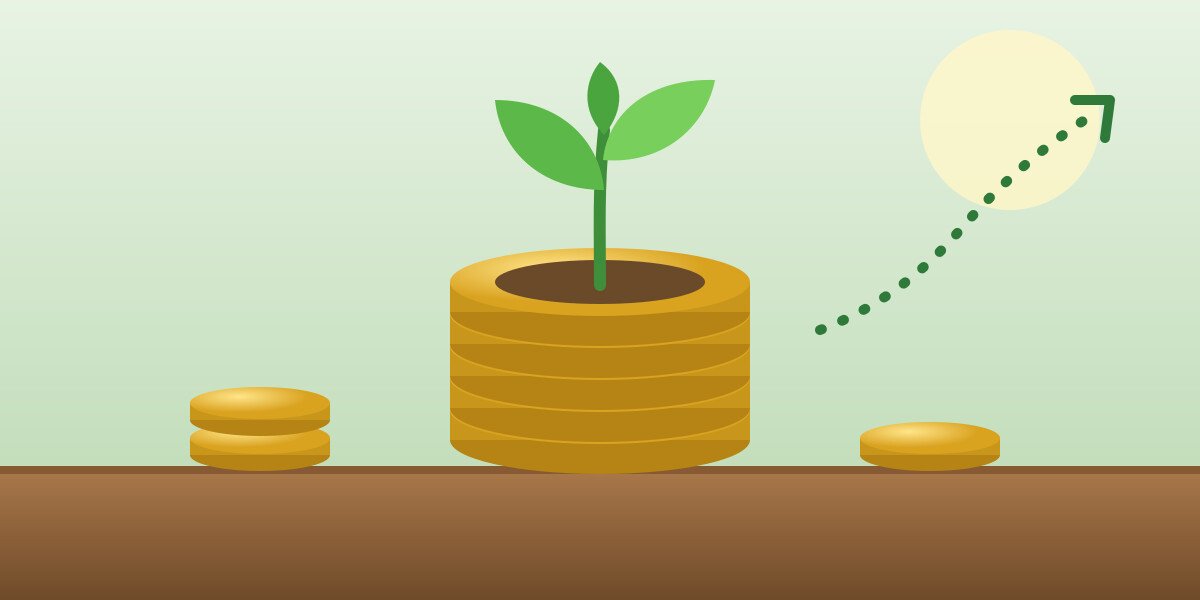
Compound interest is interest earned on both your original money and on the interest that has already been added. Because the interest itself starts earning interest, growth speeds up over time, which is why compound interest is often called the engine behind long-term savings. It can also work against you on debt. This guide explains how compound interest works, shows a simple example and gives some useful rules of thumb. It is general education, not personal advice.
Table of Contents
Simple Interest vs Compound Interest
Simple interest is calculated only on the original amount. If you put 1,000 in an account that pays 5 percent simple interest, you earn 50 every year, so after 10 years you have 1,500. With compound interest, the interest is added to the balance each period, and the next period’s interest is calculated on the larger amount.
A Compound Interest Example
Take the same 1,000 at 5 percent, compounded once a year:
- After 1 year: 1,050.00
- After 2 years: 1,102.50
- After 10 years: about 1,628.89
- After 20 years: about 2,653.30
Compared with simple interest, which would give 1,500 after 10 years and 2,000 after 20, the extra amount comes entirely from interest earning interest. The longer the time, the larger the gap. These figures are an illustration, not a forecast, because real interest rates and returns change.
The Compound Interest Formula
The standard formula is A = P (1 + r/n) ^ (n x t), where A is the final amount, P is the starting amount, r is the annual interest rate as a decimal, n is the number of times interest is compounded per year and t is the number of years. More frequent compounding, such as monthly instead of yearly, produces a slightly higher result at the same stated rate.
Three Things That Make It Work Harder
Time
Starting earlier gives money more periods to grow. Even small amounts can build up when they are left alone for many years.
Rate
A higher rate speeds up growth, but higher rates usually come with higher risk or cost, so a higher figure is not automatically better.
Regular contributions
Adding money regularly, not just once, increases the base that earns interest and can make a large difference over time.
The Rule of 72
A quick way to estimate how long money takes to double is to divide 72 by the annual rate. At 6 percent, 72 divided by 6 gives roughly 12 years. It is an approximation, but it is handy for mental math.
Real Returns and Inflation
The number on your statement is not the whole story. When prices rise, each unit of money buys less, so the real return on savings is roughly the interest rate minus inflation. A 5 percent rate during 3 percent inflation leaves about 2 percent of growth in purchasing power. This is why it helps to compare the interest you earn with the rate at which prices are rising, and to review your accounts from time to time to make sure you are still getting a fair rate. The same logic applies to debt, where a high rate can quickly outpace your repayments if you only pay the minimum.
Compound Interest Can Work Against You
The same effect applies to borrowing. Credit card balances and some loans charge compound interest, so unpaid interest can grow the amount you owe. Paying more than the minimum and reducing high-rate debt early limits the damage.
Where You See It Every Day
Savings accounts, certificates of deposit, bonds that reinvest interest, retirement accounts and investment funds that reinvest dividends can all benefit from compounding, although investment returns are not guaranteed and can fall as well as rise. For an overview of investing ideas, read our precious metals investment guide and our disclaimer. The US Securities and Exchange Commission’s Investor.gov site offers free tools, including calculators, for learning more.
Key Terms to Know
A few terms make compound interest much easier to follow.
- Principal: the amount you start with.
- Interest rate: the percentage earned over a period.
- Compounding frequency: how often interest is added, such as monthly or yearly.
- Annual percentage yield: the yearly return after compounding is included.
- Time horizon: how long the money stays invested or saved.
A Longer Worked Example
Suppose you put 1,000 into an account that earns 5 percent a year, with interest added once a year. After one year you have 1,050. In the second year you earn 5 percent on 1,050, not on 1,000, so you gain 52.50. After ten years the balance is about 1,629, and after twenty years about 2,653. These figures are only an illustration, since real returns vary, but they show how compound interest speeds up as time passes.
Why Starting Early Matters
Time is the strongest ingredient. Two people can save the same total amount, yet the one who starts earlier ends up with more because their money has more periods to grow. Waiting ten years can cost far more than saving a little extra later. Even small regular deposits count. If you are new to saving, begin with a modest amount and raise it when your income allows. First make sure you have an emergency fund, so you are not forced to withdraw your savings early.
How Regular Contributions Change the Picture
Adding money each month gives every new deposit its own time to compound. Many people find that automatic transfers on payday make saving easier because they do not rely on willpower. Increasing the amount a little each year, for example when you get a pay rise, makes the effect stronger. Over a long period the total you contribute and the interest you earn together can look very different from what you put in.
Compounding in Investing
The same principle applies when investment returns are reinvested. Many investors use low-cost funds, and our guide to what is an ETF explains one common option. Returns from investments are not guaranteed and can fall as well as rise, so the smooth numbers in examples are a simplification. Fees also reduce growth, so compare costs before you choose a product. For clear and neutral education, see Investor.gov.
Compounding and Inflation
A nominal return of 5 percent is worth less if prices rise by 3 percent, because your real gain is closer to 2 percent. It is useful to think in real terms when you plan for the long term. Read our explainer on what is inflation to see how rising prices change the value of savings.
Simple Steps to Make It Work for You
- Start as soon as you can, even with a small amount.
- Set up an automatic monthly transfer.
- Pay off high-interest debt first, because compounding works against you there.
- Choose low-fee products.
- Leave the money alone so it can keep growing.
This article is general information and not personal financial advice.
Compound Interest FAQ
How often is interest compounded?
It depends on the product. Daily, monthly, quarterly and yearly compounding are all common.
Is compound interest guaranteed?
Interest on a savings account is set by the provider and can change. Investment returns are not guaranteed.
What is the best way to benefit from compound interest?
Starting early, contributing regularly and keeping costs and debt low all help, but the right approach depends on your circumstances.