
Anthropic Says Its Claude Agents Discovered a New Enzyme System in Phage DNA
Anthropic says its Claude agents discovered a new enzyme system in phage DNA, an uncharacterized bacteriophage enzyme system the company has named array-associated reverse transcriptases, or ART, according to a September 24, 2026 report from Tech Startups.
What Happened
Table of Contents
Anthropic reported that 950 Claude agents ran for 21 hours, consuming approximately 210 million tokens, to scan more than 200,000 reverse transcriptases — enzymes that convert RNA into DNA — across bacteriophage genomes. The effort identified a previously uncharacterized enzyme system, which the company published as a preprint rather than in a peer-reviewed journal.
The disclosure came the same day Anthropic announced a separate partnership allowing Amazon to open its seller tools to outside AI agents, starting with Claude, underscoring the range of domains — from e-commerce infrastructure to biological research — in which the company is positioning its AI agents to operate autonomously at scale.
Why It Matters
Using hundreds of AI agents in parallel to scan a massive genomic dataset represents a distinct research approach from traditional computational biology, which typically relies on more narrowly scoped bioinformatics pipelines built and run by human researchers. If validated, findings like this could point to AI agents becoming a meaningful tool for accelerating early-stage biological discovery, particularly the kind of large-scale pattern recognition across genomic data that is time-consuming for human researchers to perform manually.
The choice to publish as a preprint rather than through peer review is a meaningful caveat: preprints have not undergone the scrutiny of independent expert reviewers, so the findings should be treated as an initial claim pending further validation by the broader scientific community.
What Researchers Are Watching
- Whether independent researchers can replicate or validate the ART enzyme system findings
- Peer review outcomes once the preprint is submitted for formal publication
- How AI agent-driven approaches compare to traditional bioinformatics methods in cost and accuracy
- Potential applications of newly discovered enzyme systems in biotechnology or gene-editing research
What Happens Next
The preprint will need to go through peer review before the scientific community treats the ART enzyme system discovery as fully established. In parallel, Anthropic and other AI labs are likely to continue exploring large-scale, agent-driven approaches to scientific research across biology and other data-intensive fields.
Background
Anthropic is an AI safety and research company best known for developing the Claude family of large language models, which it has increasingly positioned not just as chat assistants but as autonomous agents capable of carrying out extended, multi-step tasks with limited human supervision. The company has framed agentic AI research as a way to apply large-scale automated reasoning to problems that are traditionally slow and labor-intensive for human scientists, including sifting through large biological datasets for patterns that would otherwise require years of manual annotation.
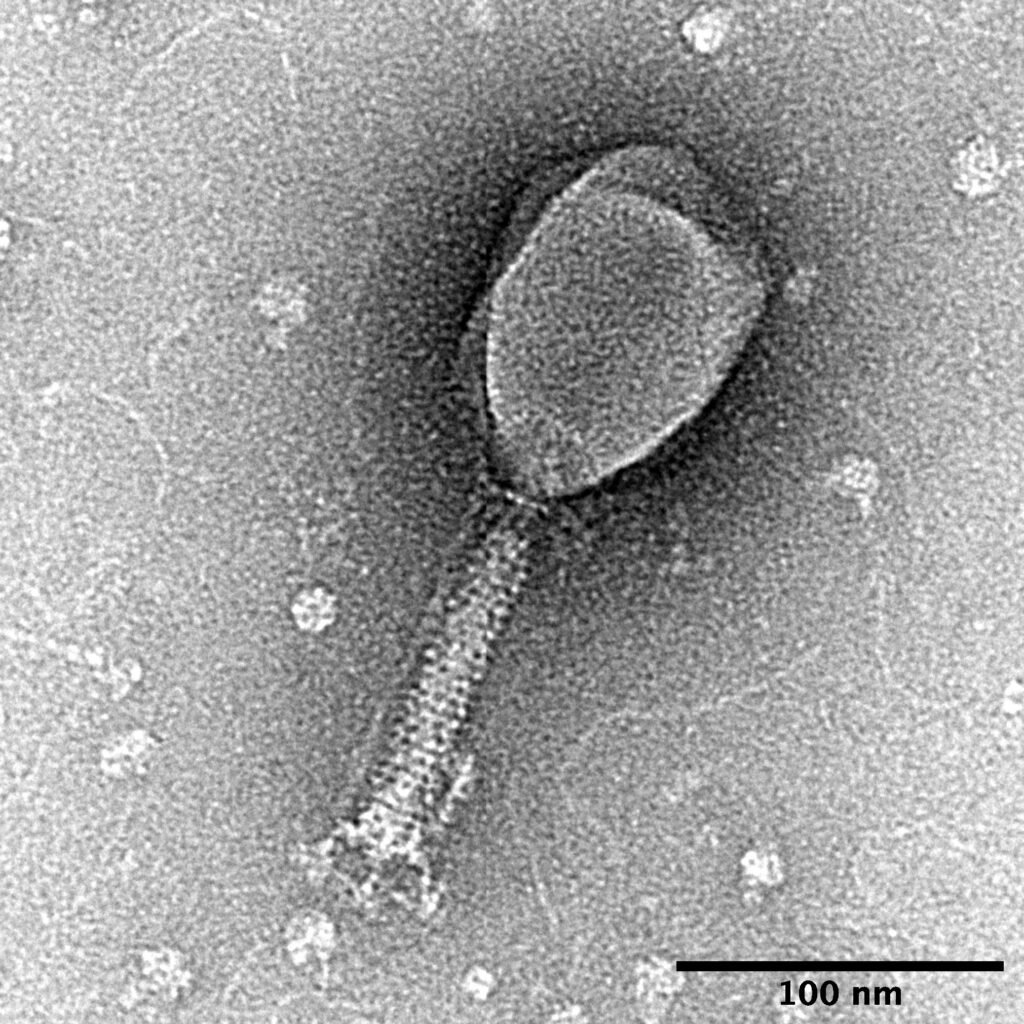
Bacteriophages, or phages, are viruses that infect bacteria rather than human or animal cells. They are the most abundant biological entities on Earth and have long been a rich source of enzymes with practical applications: restriction enzymes and other phage-derived tools underpin much of modern molecular biology, and CRISPR gene-editing systems themselves trace their origins to bacterial and phage biology. Reverse transcriptases, the class of enzyme at the center of Anthropic’s reported discovery, are best known from retroviruses such as HIV, but many bacteria and phages carry their own reverse transcriptase systems whose functions remain poorly understood. Cataloging and characterizing these systems is exactly the kind of repetitive, large-scale pattern-matching work that computational biologists have historically had to script by hand or outsource to narrow, purpose-built software pipelines.
What It Means for AI-Driven Science
If Anthropic’s account holds up under scrutiny, it would mark one of the more concrete examples yet of AI agents being deployed not to summarize or write about existing science, but to conduct an open-ended search through raw genomic data and surface a candidate discovery on their own. That distinction matters because most current applications of AI in biology involve models assisting a human researcher who defines the question, checks intermediate steps, and interprets results. Running nearly a thousand agents in parallel for the better part of a day, consuming a substantial amount of computing resources, points toward a different mode of operation in which the AI system itself does much of the initial hypothesis generation and triage across a dataset too large for any individual scientist to review directly.
This approach carries real trade-offs. Scanning at scale can surface candidates that a narrower, hypothesis-driven search would miss, but it can also generate false positives that look statistically interesting without being biologically meaningful, which is precisely why independent replication and peer review remain the standard the field will apply before treating the ART enzyme system as an established finding. For Anthropic, the disclosure also serves a strategic purpose: publicizing a biology discovery credited to its agents reinforces the company’s broader argument that Claude is capable of high-value, semi-autonomous work well beyond conversational assistance, a narrative that also featured in its same-day announcement of expanded agent access to Amazon’s seller tools. For the biotechnology sector more broadly, the episode is likely to accelerate interest in using agentic AI systems as a first-pass filter across large public genomic databases, with human researchers stepping in downstream to validate and follow up on the most promising leads.
Frequently Asked Questions
What is a reverse transcriptase?
A reverse transcriptase is an enzyme that converts RNA into DNA, a process used by certain viruses, including bacteriophages, as part of their replication cycle. Anthropic’s Claude agents scanned over 200,000 of these enzymes across phage genomes.
Has this discovery been peer-reviewed?
No. Anthropic published the findings as a preprint, meaning the research has not yet undergone formal peer review, so the discovery should be treated as preliminary pending independent validation.
How many AI agents were used in this research?
Anthropic reported using 950 Claude agents running in parallel for 21 hours, consuming approximately 210 million tokens in total to scan the genomic dataset.
Related Articles
- AI Data Center Growth: Palantir Leads with Nvidia and Dell on Sovereign Infrastructure
- Aviva Share Price Insights: Dividend Trends and Market Focus





4 Comments