
10-Year Treasury Yield Hits Highest Level Since 2007 as Inflation Fears Mount
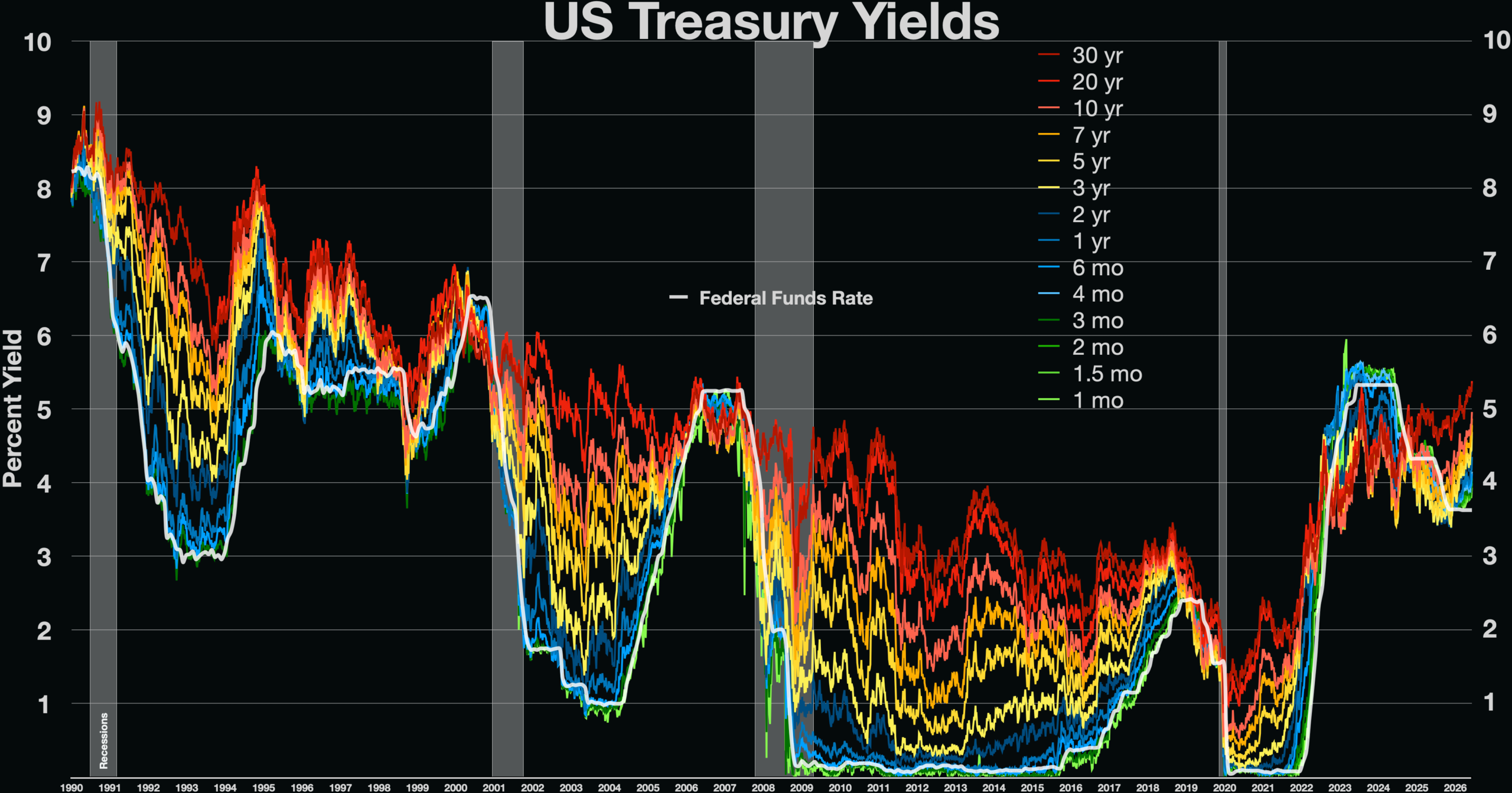
The 10-year Treasury yield hits its highest level since 2007 this week, closing at 5.11% on September 24, 2026. The move ranks among the most consequential bond-market developments of the year, since the 10-year yield acts as a benchmark for everything from mortgage rates to corporate borrowing costs.
What Happened
Table of Contents
According to TheStreet’s market coverage, the 10-year Treasury yield climbed to 5.11%, a level last seen in 2007, before the global financial crisis reshaped interest-rate policy for more than a decade. The move was not isolated: the 2-year Treasury yield rose to 4.897%, its highest since 2023, and the 30-year Treasury reached 5.438%.
A Capital.com analyst cited in the report said “real yields have risen substantially, suggesting investors are demanding higher inflation-adjusted returns” — meaning bond buyers are pricing in inflation that stays elevated for longer, not just a temporary spike.
Why It Matters
The 10-year yield is the reference point for 30-year fixed mortgage rates, corporate bond pricing, and how professional investors value stocks relative to “risk-free” government debt. When it rises this fast, borrowing costs rise across the economy almost immediately, and stocks — especially high-growth technology names priced on future earnings — become comparatively less attractive.
A 5.11% yield also revives comparisons to the pre-2008 era, when double-digit mortgage rates and tighter credit conditions were the norm. For households and businesses that adjusted their financial planning around a decade-plus of historically cheap borrowing, this repricing carries real consequences, not just headline risk.
What Investors Should Know
- Bond prices fall as yields rise, so existing bondholders have seen the value of their holdings decline
- Higher yields on “risk-free” Treasuries raise the bar for what stocks need to return to look attractive by comparison
- Rate-sensitive sectors — housing, utilities, and highly leveraged companies — tend to feel the impact first
- The move across the 2-year, 10-year, and 30-year yields together suggests broad-based repricing, not a narrow technical move
What Happens Next
Whether yields keep climbing depends largely on incoming inflation data and how the Federal Reserve responds. If price pressures ease in the coming months, yields could stabilize or pull back from this 2007-era level. If inflation proves stickier, particularly given elevated energy prices, the bond market’s current pricing suggests investors expect the Fed to hold rates higher for longer rather than cut them.
How Rates Got Here
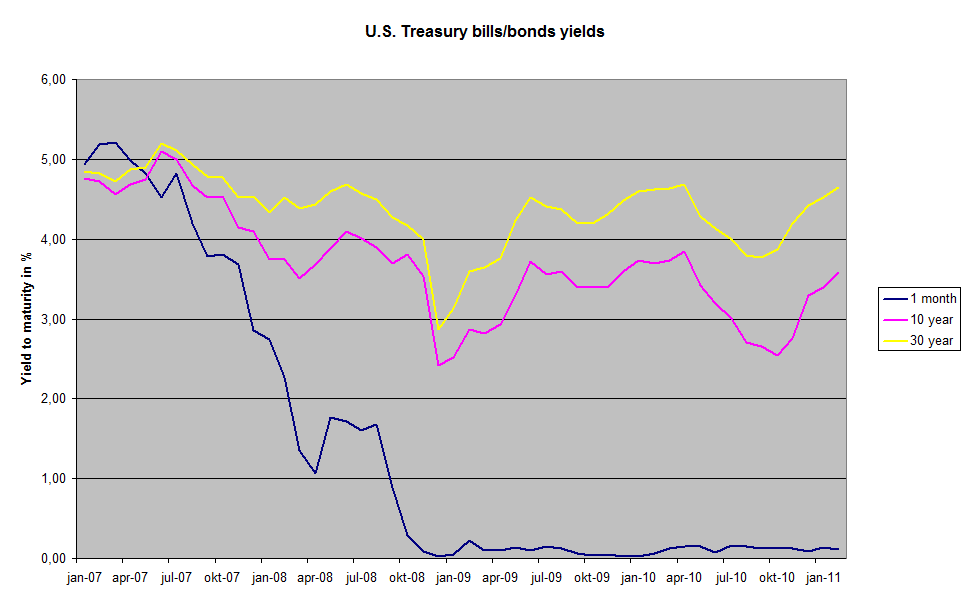
The path back to a 5.11% 10-year yield has been years in the making. After the 2008 financial crisis, the Federal Reserve cut its benchmark rate to near zero and kept it there for the better part of a decade, while also buying trillions of dollars in Treasury and mortgage bonds through quantitative easing to hold long-term yields down. Rates fell to similarly low levels again in 2020 as the Fed responded to the pandemic. That extended period of cheap money is the backdrop against which today’s 5%-plus yields feel so unfamiliar, even though, in a longer historical sweep, yields in this range were common for much of the 1990s and earlier.
Since then, the climb back toward 2007-era levels has been gradual rather than sudden, building as inflation proved more persistent than policymakers initially expected and as the federal government’s borrowing needs grew. Every Treasury auction adds supply to the bond market, and when demand doesn’t keep pace with that supply, yields have to rise to attract buyers. The fact that the move on September 24 showed up across the 2-year, 10-year, and 30-year maturities simultaneously — rather than in just one part of the yield curve — is consistent with a market repricing its inflation and fiscal outlook broadly, rather than reacting to a single data point or event.
Impact on Borrowers and Businesses
The most direct effect of a 10-year yield near 2007 levels shows up in the housing market. Homeowners who locked in mortgages during the low-rate years now have little financial incentive to sell and take on a new loan at today’s rates, a dynamic that has kept existing-home inventory tight in many markets. New and prospective buyers, meanwhile, face materially higher monthly payments for the same purchase price compared with just a few years ago, which weighs on affordability even if home prices themselves hold steady.
Businesses face a parallel squeeze. Companies that need to refinance existing debt or raise new capital through bond issuance are doing so at rates well above what they may have budgeted for, which can crimp expansion plans, hiring, and share buybacks. Highly leveraged firms and those with large amounts of debt coming due in the near term are the most exposed, while companies with strong balance sheets and limited refinancing needs are better insulated. This is part of why the market reaction to rising yields is rarely uniform: the same headline number affects a heavily indebted small-cap company very differently than it affects a cash-rich large-cap one.
For the broader economy, sustained borrowing costs at these levels act as a natural brake on growth, which is part of the mechanism the Federal Reserve relies on when it wants to cool inflation. The open question is whether that brake is now being applied more by market forces — through the bond market’s own pricing — than by the Fed’s own rate decisions.
Frequently Asked Questions
Why does the 10-year Treasury yield matter to ordinary people?
Mortgage lenders use the 10-year Treasury yield as a key reference point when setting 30-year fixed mortgage rates. When it rises, mortgage rates typically follow, making home loans and other long-term borrowing more expensive.
What is a “real yield” and why does it matter here?
A real yield is the return on a bond after subtracting expected inflation. Rising real yields mean investors want more compensation above and beyond inflation to hold long-term debt, which signals reduced confidence that inflation will fall quickly.
Could the 10-year yield go higher than 5.11%?
It’s possible. The direction depends heavily on upcoming inflation reports and Federal Reserve policy signals. A further increase in inflation expectations or a hawkish shift from the Fed could push yields higher still.
Related Articles
- Fed Interest Rate Hike 2026: Powerful Impact on Markets and Investors
- Fed Interest Rate Decision Explained: Key Insights for Markets and Investors





One Comment