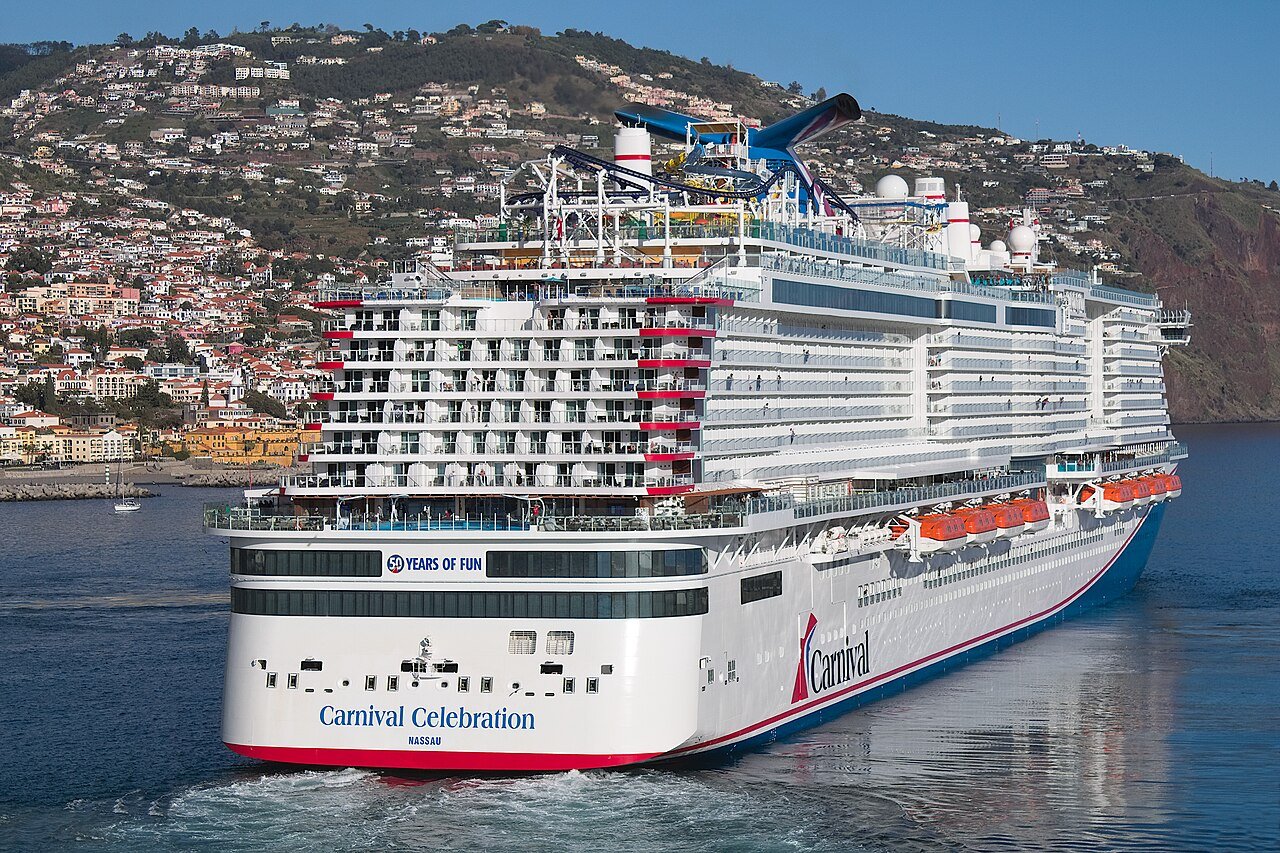
Carnival Stock Jumps as Cruise Giant Beats Q3 Earnings Estimates
Carnival Corporation (CCL) shares jumped after the world’s largest cruise operator beat Wall Street’s fiscal third-quarter estimates, reporting earnings per share of $1.43 against a consensus estimate of $1.32, and revenue of $8.15 billion versus $8.07 billion expected. The company raised its full-year guidance for the third consecutive quarter, citing sustained demand and record advance bookings. Carnival’s adjusted net income rose 13.2% year over year to $1.98 billion, while adjusted EBITDA climbed to $3 billion from $2.82 billion a year earlier.
What Happened
Table of Contents
Passenger ticket revenue rose to $5.43 billion from $5.24 billion a year earlier, while onboard and other revenue — which includes spending on dining, entertainment, and excursions once passengers are aboard — climbed to $2.72 billion from $2.66 billion. Together, those gains pushed total revenue up 3.3% year over year to $8.15 billion, topping analyst expectations and marking another strong quarter for the post-pandemic cruise recovery.
Carnival’s stock rose roughly 11.65% following the report, reflecting investor enthusiasm not just for the beat itself but for management’s confidence in sustained demand heading into 2027. The company said nearly 50% of fiscal 2026 capacity is already booked at record prices, and that fiscal 2027 has already achieved record booking volumes during the third quarter — an unusually strong forward-booking signal this early in the cycle.
Why It Matters
Carnival’s results offer a read on the health of consumer discretionary spending more broadly. Cruise vacations are a highly elastic spending category — one of the first things households cut back on when budgets tighten — so record advance bookings at record prices suggest resilient demand from leisure travelers even amid broader economic uncertainty, including elevated mortgage rates and bond yields covered elsewhere in markets this year.
The results also matter for Carnival specifically because the company has spent years working to repair a balance sheet strained heavily during the pandemic-era shutdown of the cruise industry. Three consecutive quarters of raised guidance suggest that recovery has moved from stabilization into genuine growth, with management increasingly confident in forward demand rather than merely managing down debt.
Behind the Earnings Beat
Management pointed to sustained demand strength and effective cost management as the primary drivers behind the quarter’s outperformance. The combination allowed Carnival to grow both its top line and its margins simultaneously — a harder combination to achieve than revenue growth alone, since it means the company is capturing more of each incremental dollar of revenue as profit.
- EPS of $1.43 beat the $1.32 consensus estimate by 8.3%
- Revenue of $8.15 billion beat the $8.07 billion consensus by about 1%
- Adjusted net income rose 13.2% year over year to $1.98 billion
- Adjusted EBITDA rose to $3 billion from $2.82 billion a year earlier
- Nearly 50% of fiscal 2026 capacity already booked at record prices
Carnival raised its full-year adjusted EBITDA guidance to approximately $7.05 billion from a prior estimate of about $6.9 billion, representing more than 15% year-over-year growth. Full-year adjusted net income guidance was raised to roughly $2.925 billion from $2.69 billion, and adjusted EPS guidance climbed to approximately $2.14 from $1.97 — the third straight quarter the company has revised its full-year outlook upward.
What Analysts Are Saying
Analysts covering Carnival have pointed to the company’s yield guidance — a measure of revenue generated per available berth — as a potential catalyst for re-rating the stock, arguing it could help close a valuation discount that has lingered on cruise stocks since the pandemic. Strong bookings momentum heading into the earnings report had already led some analysts to flag the potential for a beat, and the actual results exceeded even those more optimistic pre-earnings expectations.
The record forward bookings for fiscal 2027, disclosed alongside the Q3 results, are seen as particularly significant because they extend the visibility window on Carnival’s revenue well beyond the current fiscal year, giving analysts more confidence in modeling continued growth rather than a one-quarter pop.
What It Means for Cruise Travelers
For consumers, record bookings “at record prices” signal that cruise fares are likely to keep climbing rather than fall back toward pandemic-era discount levels. Travelers hoping to lock in lower prices for upcoming sailings may want to book earlier rather than later, particularly for itineraries already showing strong demand. At the same time, robust onboard revenue growth suggests cruise lines continue to successfully upsell dining, excursions, and other add-ons, which remains a meaningful part of the total cost of a modern cruise vacation.
Frequently Asked Questions
Why did Carnival stock jump after earnings?
Carnival beat both earnings and revenue estimates for its fiscal third quarter, reporting EPS of $1.43 versus $1.32 expected and revenue of $8.15 billion versus $8.07 billion expected, while also raising full-year guidance for the third straight quarter.
How much of fiscal 2026 has Carnival already booked?
Carnival said nearly 50% of its fiscal 2026 capacity is already booked at record prices, and it also reported record booking volumes for fiscal 2027 during the third quarter.
Did Carnival raise its full-year guidance?
Yes. Carnival raised full-year adjusted EBITDA guidance to about $7.05 billion, adjusted net income guidance to about $2.925 billion, and adjusted EPS guidance to about $2.14 — its third consecutive quarterly guidance increase.
Related Articles
- MGM Resorts Stock Sinks as Barry Diller Walks Away From $18 Billion Buyout
- Starbucks to Close About 250 Underperforming North American Stores