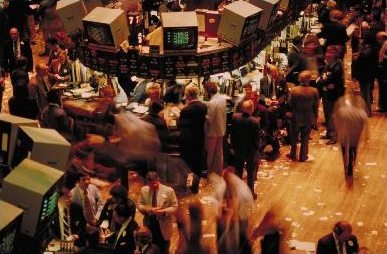
Wall Street Slides as Bond Yields Surge and Xi Jinping Lands in Washington
Wall Street slides as bond yields surge on Thursday, September 24, 2026, with the S&P 500, Dow Jones Industrial Average and Nasdaq Composite all closing lower even as Chinese President Xi Jinping arrived in Washington for high-stakes trade talks with President Trump. The selloff came down to one number: the 10-year Treasury yield, which jumped to its highest level since 2007.
What Happened
Table of Contents
The S&P 500 fell 0.51%, the Dow Jones Industrial Average slipped 0.32%, the Nasdaq Composite retreated 0.78%, and the small-cap Russell 2000 dropped 1.77%, according to TheStreet’s market recap for the session. The move tracked a sharp bond selloff: the 10-year Treasury yield jumped to 5.11%, its highest level since 2007, while the 2-year yield climbed to 4.897% (a level not seen since 2023) and the 30-year Treasury reached 5.438%.
A Capital.com analyst quoted in the same report said “real yields have risen substantially, suggesting investors are demanding higher inflation-adjusted returns” — a sign that bond markets, not just equity traders, are recalibrating for a longer stretch of elevated interest rates.
The session also had a geopolitical backdrop. Xi Jinping arrived in the United States for talks with President Trump, and Treasury Secretary Scott Bessent announced the two countries would extend their trade truce through January 10, 2027, with AI competition and critical minerals access remaining central topics of discussion, according to Yahoo Finance’s live markets coverage.

Why It Matters
When Wall Street slides as bond yields surge this quickly, it changes the math for nearly every asset class at once. Higher Treasury yields make borrowing more expensive for companies and consumers, pull money away from growth stocks that depend on cheap financing, and raise the bar for what counts as an attractive return in equities. The Nasdaq’s steeper decline relative to the Dow reflects exactly that dynamic — richly valued technology and AI names are typically the most sensitive to rising rates.
Individual stocks underscored how uneven the damage was. MGM Resorts tumbled nearly 10% after Barry Diller’s People Inc. withdrew an $18 billion buyout proposal, Oracle lost more than 6% following a force majeure notice tied to a New Mexico data center project, and TD Synnex sank 13% despite posting record fiscal third-quarter earnings — a reminder that in a jittery, high-yield environment, even good news can get sold.
What the Market Is Watching
- Whether the 10-year yield stabilizes near 5.1% or keeps climbing toward 2007-era levels
- Concrete outcomes from the Trump-Xi meetings beyond the trade-truce extension
- Whether inflation data in the coming weeks validates or eases the market’s rate-hike expectations
- How rate-sensitive sectors — technology, real estate and small caps — perform if yields stay elevated
Analysts are not treating this as a one-day event. A sustained move above 5% on the 10-year Treasury would mark a genuine regime shift from the low-rate decade that followed the 2008 financial crisis, and investors are watching closely to see whether Thursday’s levels hold into next week.
What Happens Next
The extended US-China trade truce removes one source of uncertainty through January 2027, but it does not address the bond market’s core concern: that inflation may be stickier than the Federal Reserve’s rate path currently assumes. Traders will be watching upcoming inflation and labor market data for signs of whether the Fed needs to hold rates higher for longer, which would keep pressure on both stocks and bonds simultaneously.
Historical Context
The last time the 10-year Treasury yield traded near 5% was in 2007, just before the global financial crisis. What followed was more than a decade of extraordinarily low rates: the Federal Reserve cut its benchmark rate to near zero during the crisis and kept policy loose through several rounds of quantitative easing, and rates were pinned near zero again during the pandemic in 2020. That stretch trained a generation of investors to expect cheap borrowing costs as the default backdrop for stocks, real estate and corporate debt alike.
What makes the current move notable is the reason behind it. The 2007 run-up in yields came alongside a credit bubble that was about to burst, followed by aggressive rate cuts as the economy contracted. Thursday’s climb to 5.11% on the 10-year, and 5.438% on the 30-year, is instead being driven by persistent concern over inflation and the amount of government debt the market has to absorb — a very different set of forces reaching a similar headline level. That distinction matters because it shapes how long elevated yields might last: a crisis-driven spike historically reverses quickly once the Fed intervenes, while yields driven by structural inflation and issuance pressure can stay elevated for years.
What It Means for Investors
A sustained move to these yield levels reshuffles the calculus across a portfolio, not just for stocks that dropped on Thursday. Bonds themselves become more attractive on a standalone basis: a 10-year Treasury yielding above 5% offers a real, government-backed return that competes directly with the dividend yields many income-focused equity investors have relied on. That competition is part of why growth and technology stocks — which depend on discounting future earnings back to the present at a higher rate — tend to underperform when yields rise quickly, a pattern reflected in the Nasdaq’s steeper Thursday decline compared with the Dow.
Smaller companies face a related but distinct pressure. The Russell 2000’s larger drop reflects the fact that small-cap firms typically carry more floating-rate and shorter-term debt than large-cap peers, so their borrowing costs move more directly with Treasury yields. Sectors like real estate, which rely heavily on debt financing, also tend to feel higher-rate environments more acutely, while financial companies such as banks and insurers can sometimes benefit from wider margins between what they pay depositors and what they earn on loans and investments.
For now, the extended US-China trade truce removes one variable investors would otherwise have to price in alongside rising yields. But it does not change the underlying bond market signal: that inflation-adjusted returns are being repriced higher, and investors positioning portfolios around a low-rate assumption may need to reassess how much of that assumption still holds.
Frequently Asked Questions
Why did Wall Street slide as bond yields surge on September 24, 2026?
The 10-year Treasury yield jumped to 5.11%, its highest level since 2007, as investors demanded higher inflation-adjusted returns. Rising yields make future corporate earnings less attractive by comparison, which pressured stocks broadly, especially in rate-sensitive sectors.
What did Trump and Xi agree on?
Treasury Secretary Scott Bessent announced that the US and China would extend their existing trade truce through January 10, 2027, with AI competition and critical minerals access remaining key points of discussion between the two governments.
Which stocks were hit hardest?
The Russell 2000 small-cap index fell 1.77%, more than the broader S&P 500’s 0.51% decline. Among individual names, MGM Resorts, Oracle and TD Synnex posted some of the steepest single-day losses on company-specific news layered on top of the market-wide yield pressure.
Related Articles
- US Stock Market Reaction to the Rate Hike: Powerful Winners and Losers in 2026
- Fed Interest Rate Hike 2026: Powerful Impact on Markets and Investors