
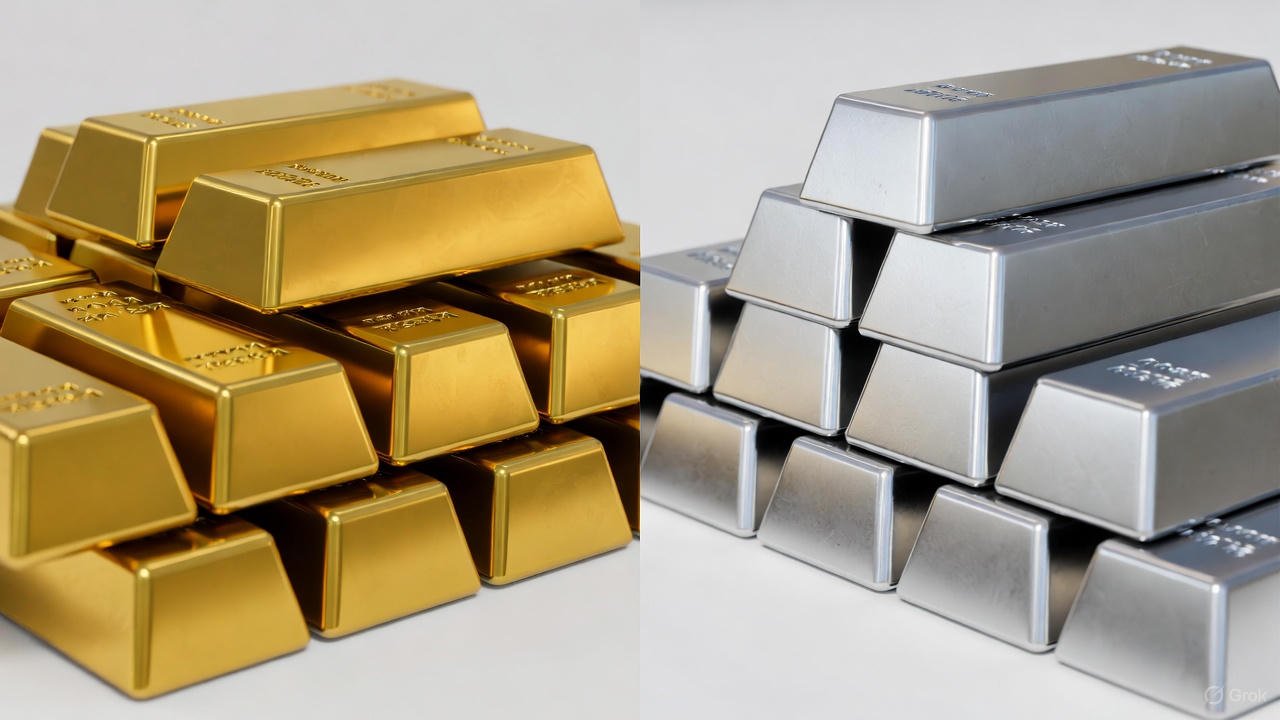
Gold vs Silver Comparison Clarifies Investment Strategy
Gold vs Silver Comparison for Smarter Investment Decisions
Gold vs silver comparison is one of the most common questions investors ask when exploring precious metals. While both metals have been used as stores of value for centuries, they behave very differently in modern financial markets. Their price movements, demand drivers, and investment roles are not interchangeable.
Understanding these differences is essential for investors who want to align precious metals exposure with their financial goals, risk tolerance, and time horizon.
This guide breaks down how gold and silver compare across key investment factors, helping you make informed decisions rather than relying on assumptions.
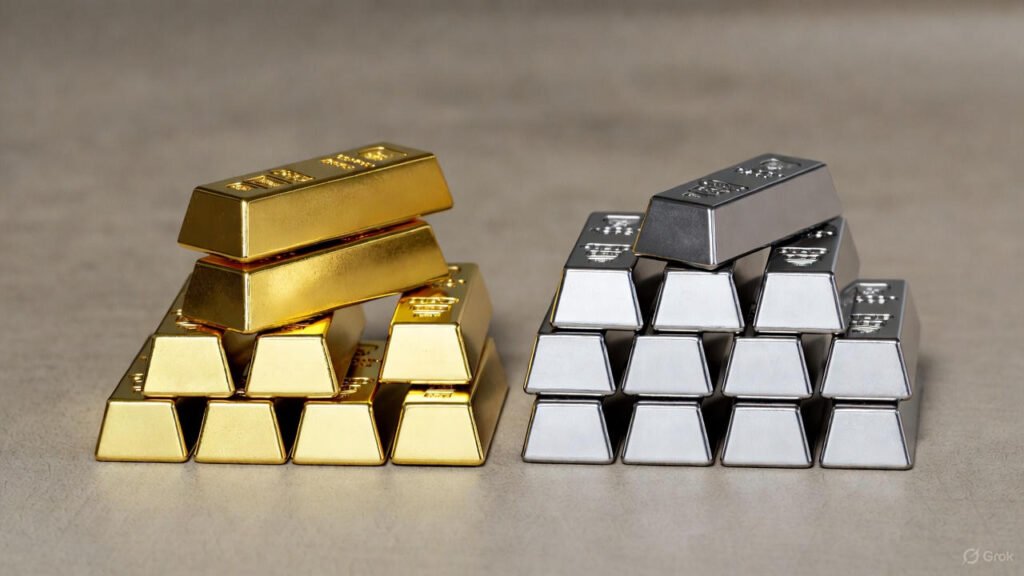
Understanding the Core Difference Between Gold and Silver
At a glance, gold and silver may appear similar. Both are tangible assets, globally traded, and widely recognized. However, their economic roles differ significantly, which shapes their behavior.
Gold functions primarily as a monetary and financial asset. It is held by central banks, governments, and long-term investors as a hedge against inflation, currency depreciation, and systemic risk.
Silver, on the other hand, isn’t limited to just one purpose. It is both a monetary metal and an essential industrial material. This combination introduces higher sensitivity to economic cycles.
This fundamental distinction lies at the heart of any meaningful gold vs silver comparison.
Gold vs Silver Comparison: Market Demand Drivers
Gold Demand Structure
Gold demand is largely driven by:
- Central bank reserves
- Investment demand
- Jewelry consumption
- Wealth preservation
Because gold is not heavily consumed by industry, most of the gold ever mined still exists in accessible form. This makes its supply relatively stable.
Silver Demand Structure
Silver demand is far more complex. In addition to investment and jewelry demand, silver is heavily used in:
- Solar panels
- Electronics and semiconductors
- Medical instruments
- Automotive components
A large portion of silver is consumed permanently in industrial processes, reducing available supply over time. This industrial dependence adds another layer of volatility.
Gold vs Silver Comparison: Price Volatility
One of the clearest differences in a gold vs silver comparison is volatility.
Silver prices tend to swing more aggressively than gold. This happens for several reasons:
- Smaller overall market size
- Higher industrial sensitivity
- Greater speculative participation
Gold, by contrast, moves more slowly and predictably. Its larger market capitalization and central bank involvement help stabilize prices during turbulent periods.
For conservative investors, this lower volatility often makes gold more attractive.
Affordability and Accessibility
Silver’s Lower Entry Cost
Silver’s lower price per ounce makes it more accessible to new and small-scale investors. This affordability allows for incremental accumulation without large upfront capital.
However, lower price does not mean lower risk. Silver’s volatility can amplify gains and losses alike.
Gold’s Concentrated Value
Gold’s higher price means that large amounts of value can be stored in small physical volumes. This makes gold easier to transport and store for high-net-worth investors.
In any gold vs silver comparison, affordability must be weighed against risk tolerance.
Storage and Liquidity Considerations
Both metals are highly liquid, but storage logistics differ.
Silver requires more physical space per dollar invested. Large silver holdings can become costly to store and insure.
Gold’s density makes storage more efficient, which partly explains its popularity among institutions and central banks.
Gold vs Silver Comparison: Performance in Economic Cycles
During Economic Uncertainty
Gold historically performs well during financial crises, recessions, and geopolitical tension. Investors tend to seek gold when confidence in financial systems declines.
Silver may also rise during uncertainty, but its industrial exposure can limit upside if economic activity slows sharply.
During Economic Expansion
Silver often outperforms gold during periods of strong economic growth due to rising industrial demand. Renewable energy expansion has strengthened this trend.
This cyclical behavior is a key insight from a gold vs silver comparison.
Tax and Investment Structure Differences
Depending on jurisdiction, gold and silver may be taxed differently. Investment vehicles such as ETFs, physical holdings, and mining stocks also come with varying tax treatments.
Understanding these differences is essential when planning long-term holdings.
Should Investors Choose Gold or Silver?
There is no universal answer.
- Gold suits investors seeking stability, capital preservation, and lower volatility.
- Silver appeals to investors comfortable with risk and interested in growth tied to industrial demand.
Many experienced investors hold both metals to balance stability and opportunity.
Helpful Resources
- https://www.investopedia.com/articles/investing/080516/gold-vs-silver-which-better-investment.asp
- https://www.silverinstitute.org
Conclusion
A well-structured gold vs silver comparison reveals that both metals play distinct roles in an investment portfolio. Gold offers stability and wealth preservation, while silver provides exposure to industrial growth and higher volatility.
Choosing between them—or combining both—depends on individual goals, risk tolerance, and market outlook.
What to Read Next






One Comment