
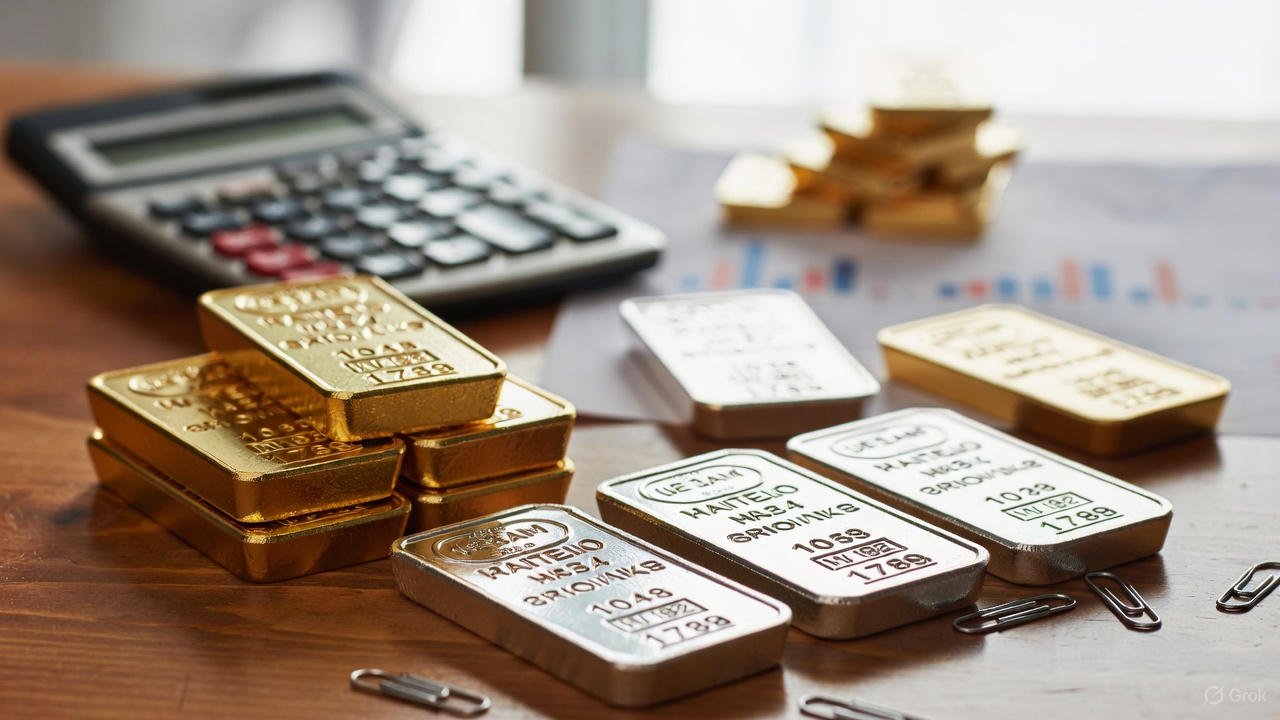
Precious Metals Investment Guide Reveals Smart Portfolio Balance
Precious Metals Investment Guide for Building a Balanced Portfoli
Precious metals investment guide content has become increasingly relevant as investors look for stability amid inflation concerns, market volatility, and economic uncertainty. Gold and silver, in particular, have maintained their role as trusted assets for centuries, offering diversification and long-term value preservation.
This guide explains how precious metals work as investments, why they remain relevant today, and how investors can approach them wisely.
What Are Precious Metals?
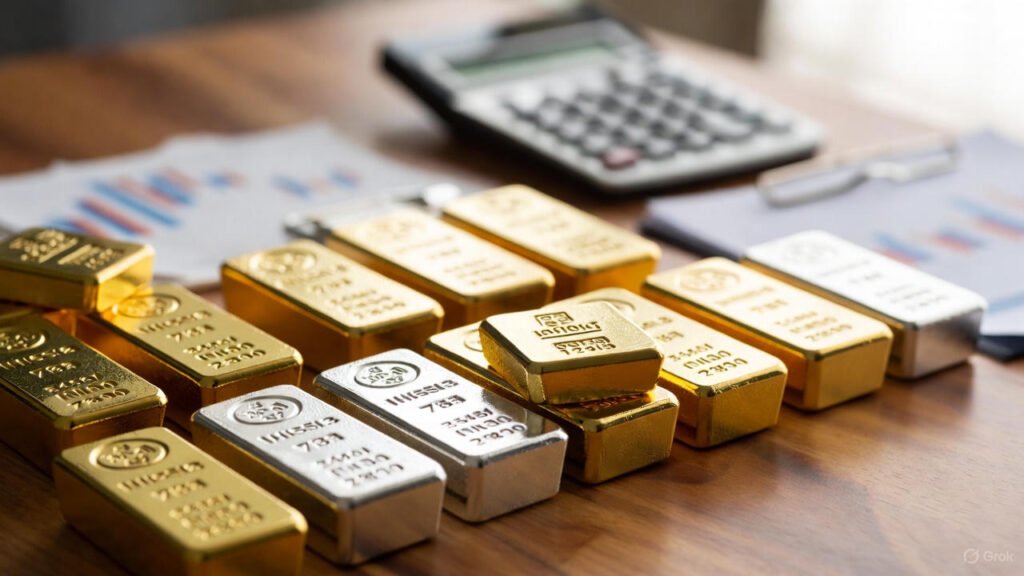
Precious metals are rare natural elements with high economic value. In investment markets, the most commonly traded precious metals include:
- Gold
- Silver
- Platinum
- Palladium
Gold and silver dominate investor interest due to their liquidity, global recognition, and historical role as stores of value.
Why Investors Use Precious Metals
Portfolio Diversification
One of the main reasons investors follow a precious metals investment guide is diversification. Precious metals often move independently of stocks and bonds, helping reduce overall portfolio risk during market downturns.
Inflation Protection
When inflation rises, the purchasing power of paper currency can weaken. Precious metals, being tangible assets, have historically retained value during such periods, making them attractive as inflation hedges.
Financial Stability and Trust
Gold and silver are not tied to the performance of a single company or government. This independence gives them credibility during periods of geopolitical tension or financial instability.
Different Ways to Invest in Precious Metals
Physical Metals
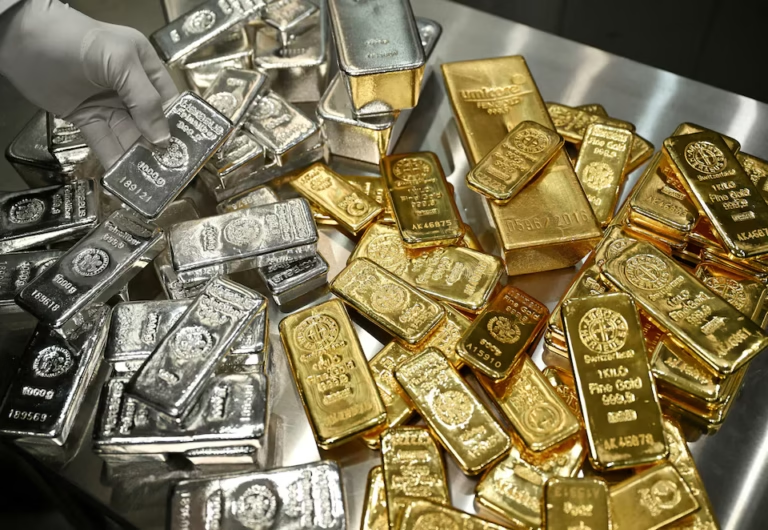
Buying physical gold or silver in the form of coins or bars offers direct ownership. However, storage, insurance, and liquidity considerations must be taken into account.
Exchange-Traded Products
ETFs backed by precious metals provide price exposure without physical storage. These are popular for convenience and ease of trading.
Mining Stocks
Mining companies offer indirect exposure to precious metals. Their performance depends not only on metal prices but also on operational efficiency and management.
Futures and Derivatives
Advanced investors may use futures contracts to hedge or speculate. These instruments involve leverage and require careful risk management.
Risks to Consider
A precious metals investment guide would be incomplete without addressing risks:
- Price volatility, especially with silver
- No income generation (no dividends or interest)
- Storage and security costs for physical metals
Precious metals are best used as a supporting component, not the sole focus of an investment strategy.
Helpful Resources
Conclusion
A well-structured precious metals investment guide shows that gold and silver are tools for balance, stability, and long-term planning. When used thoughtfully, they can strengthen a diversified portfolio without replacing core investments.
What to Read Next





One Comment