
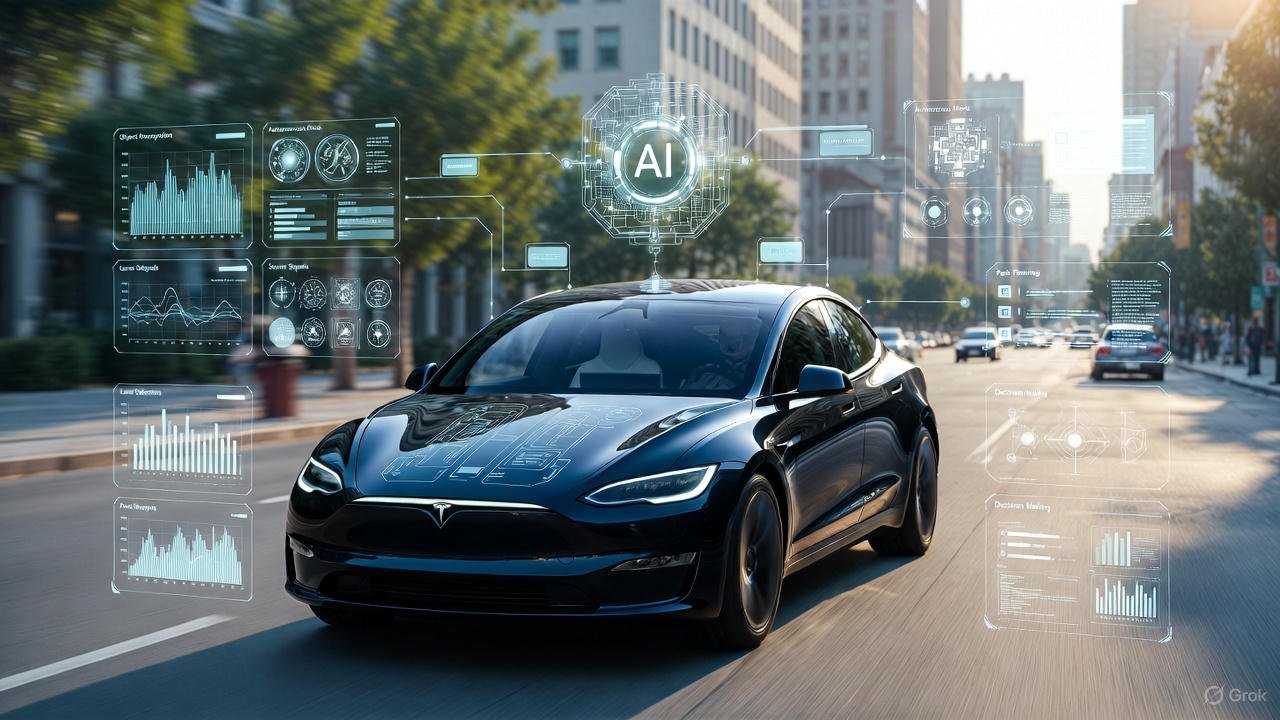
Tesla AI Strategy Insights: What’s Ahead for the Future of Autonomous Technology
Tesla AI Strategy: Shaping the Future of Autonomous Technology
The Tesla AI strategy is quickly becoming one of the most influential forces in the automotive and tech industries. With Tesla doubling down on artificial intelligence, investors, consumers, and tech enthusiasts alike are keenly watching how these developments will impact autonomous driving, vehicle efficiency, and the company’s broader technological ecosystem.
In this article, we break down the key components of Tesla’s AI approach, its potential implications, and what to expect in the near future.
Understanding the Tesla AI Strategy
AI in Autonomous Driving
At the core of Tesla’s AI strategy is its pursuit of fully autonomous vehicles. Tesla’s Full Self-Driving (FSD) system relies on a sophisticated AI framework that processes enormous amounts of data collected from its fleet of vehicles worldwide.
The company’s AI strategy emphasizes real-world learning, where data from Tesla vehicles informs continuous improvements to the software. This approach allows Tesla to refine algorithms for navigation, obstacle detection, and decision-making, gradually moving closer to a hands-free driving experience.
Neural Network Training and Data Collection
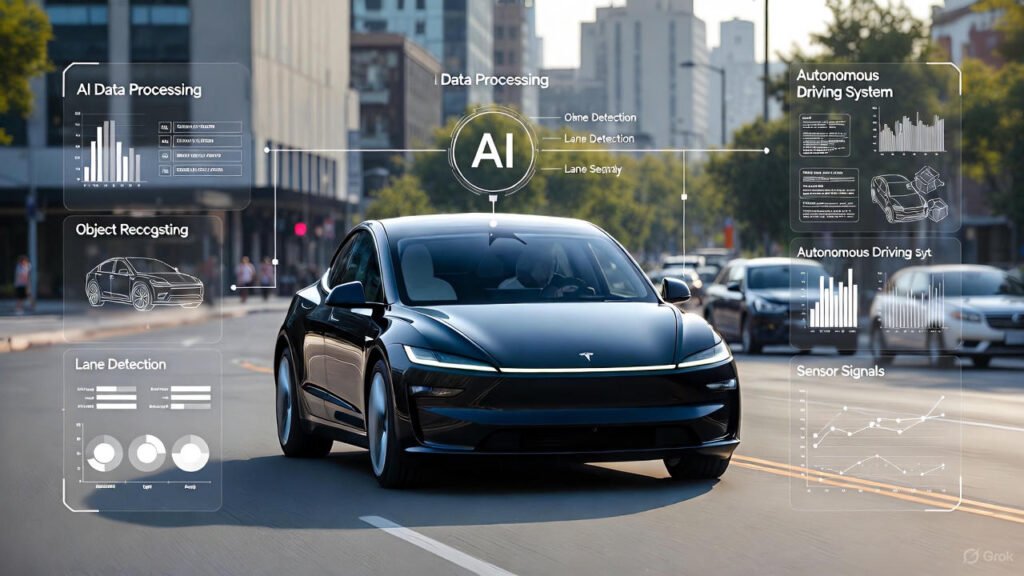
Tesla leverages a neural network-based AI system that processes visual and sensor inputs from its vehicles. Every journey contributes to the AI model, enhancing object recognition, predictive analysis, and decision-making accuracy.
This large-scale data collection is central to Tesla’s AI strategy, providing the company with an advantage over competitors that rely on limited simulation data or smaller fleets.
Tesla AI Strategy in Robotics and Beyond
Humanoid Robots and AI Applications
Tesla’s ambitions extend beyond cars. Part of the company’s AI strategy involves the development of humanoid robots, designed to perform tasks in manufacturing and logistics. This initiative leverages Tesla’s expertise in AI, machine learning, and sensor technology to create adaptive, intelligent robots capable of interacting with real-world environments.
These robotics initiatives highlight how Tesla is positioning itself as a leader not only in mobility but also in broader AI applications, blending automotive innovation with cutting-edge robotics research.
Robotaxi Plans and AI Integration
A major part of Tesla’s future AI plans includes robotaxi services, where fully autonomous vehicles operate as ride-hailing options. Tesla aims to integrate its AI systems into these vehicles, enabling safe, efficient, and scalable autonomous transport.
This initiative could transform urban mobility, reduce costs for consumers, and create a new revenue stream for Tesla, demonstrating how AI forms the backbone of the company’s long-term growth strategy.
Implications for Investors and the Market
Investor Expectations and Valuation
Tesla’s focus on AI has significant implications for investors. The market is increasingly viewing Tesla as both an automaker and an AI company, which introduces complexities in valuation. Traditional automotive metrics may no longer capture the potential revenue from AI-driven services like robotaxis or AI-powered manufacturing solutions.
Analysts note that while the potential is enormous, the uncertainties tied to AI timelines and regulatory approval make Tesla’s stock more challenging to evaluate, requiring careful consideration of both tech potential and market adoption.
Competitive Landscape
Tesla’s AI strategy positions it ahead of many competitors in autonomous driving and intelligent robotics. However, other automotive and tech companies are investing heavily in AI, signaling an increasingly competitive environment.
Success will depend on Tesla’s ability to deploy reliable AI systems, scale autonomous services, and maintain data-driven improvements faster than rivals.
Challenges and Considerations in Tesla’s AI Strategy
Regulatory Hurdles
The deployment of AI-driven autonomous systems faces regulatory scrutiny worldwide. Tesla must navigate a complex landscape of safety standards, liability laws, and testing requirements to implement its AI strategy successfully.
Technological and Ethical Challenges
While Tesla’s AI systems are advanced, challenges remain, including edge-case handling, decision-making in unpredictable conditions, and ethical considerations in autonomous vehicle operations. Addressing these issues is critical to public trust and adoption.
What’s Next for Tesla AI Strategy
Tesla is expected to continue investing heavily in AI research and development. Key areas to watch include:
- Enhanced Full Self-Driving capabilities for consumer vehicles
- Expansion of robotaxi services in select markets
- Deployment of humanoid robots in manufacturing
- Improved AI algorithms for navigation, safety, and decision-making
These developments suggest that Tesla’s AI strategy is not just a feature of its vehicles but a central pillar of the company’s future growth.
Helpful Resources
- Tesla Official AI and Autopilot Overview
- Understanding Neural Networks in AI
- Autonomous Vehicle Market Insights
Conclusion
The Tesla AI strategy underscores the company’s ambition to redefine mobility and intelligent technology. From autonomous driving to robotics and robotaxi services, AI sits at the heart of Tesla’s innovation roadmap. While challenges and market uncertainties remain, Tesla’s approach demonstrates a long-term vision that integrates real-world data, cutting-edge machine learning, and transformative technology applications.
As Tesla continues to implement and refine its AI strategy, both the automotive industry and the broader tech ecosystem will closely watch the company’s next moves.
What to Read Next




One Comment