

How Artificial Intelligence is Reshaping the Future of Business Operations
How Artificial Intelligence is Reshaping the Future of Business Operations
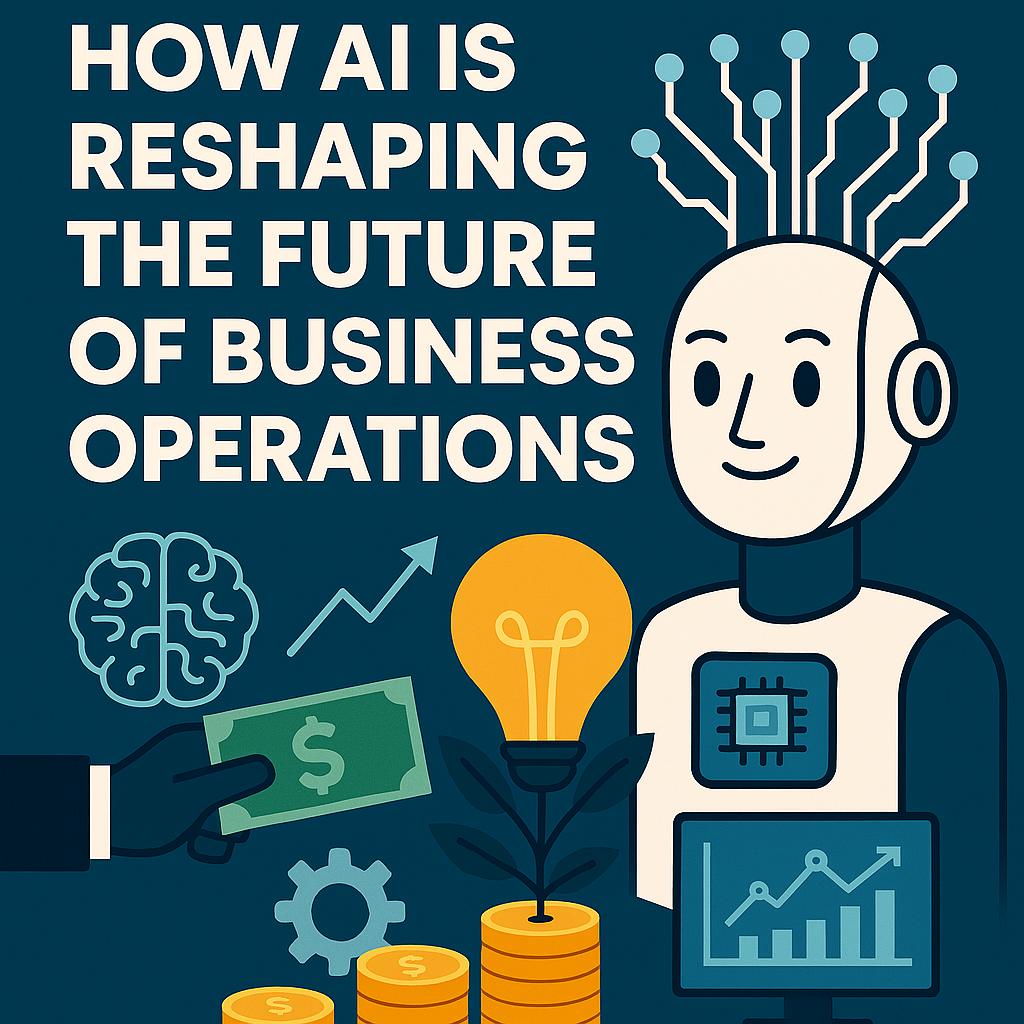
In recent years, artificial intelligence (AI) has emerged as a game-changer in virtually every industry. From healthcare to finance, and from manufacturing to customer service, AI is not just a futuristic technology it’s transforming the way businesses operate today. Companies that adopt AI-driven solutions are realizing significant improvements in efficiency, decision-making, and customer satisfaction. In this blog post, we’ll explore how artificial intelligence in business operations is reshaping the future of work and what organizations can expect as this technology continues to evolve.
What is Artificial Intelligence in Business Operations?
Artificial intelligence in business operations refers to the use of AI technologies to automate, optimize, and enhance various functions within an organization. These AI systems analyze vast amounts of data, identify patterns, and make decisions or recommendations based on their findings. The goal is to improve operational efficiency, reduce human error, and provide valuable insights that can drive better business outcomes.
Whether it’s automating routine tasks, streamlining decision-making, or enhancing customer interactions, AI is playing a pivotal role in reshaping how businesses operate in the digital age.
1. Automation of Repetitive Tasks
One of the most significant ways AI is transforming business operations is through automation. Repetitive tasks that once required significant human effort such as data entry, scheduling, or invoice processing can now be efficiently handled by AI-driven software. By automating these time-consuming processes, businesses can free up employees to focus on more strategic, value-added tasks.
For instance:
- AI chatbots can automate customer service, answering frequently asked questions and resolving issues in real-time.
- Robotic Process Automation (RPA) software can handle back-office tasks like payroll processing and order tracking without human intervention.
This automation not only boosts productivity but also reduces the risk of errors, leading to more consistent and reliable business operations.
2. Improved Decision-Making with Data Analytics
AI-powered tools excel at processing large amounts of data much more than any human could manage. By analyzing this data, businesses can gain valuable insights into trends, customer preferences, and market conditions, which helps in making more informed decisions.
For example:
- Predictive analytics can help businesses forecast demand, identify market trends, and optimize inventory management, ensuring that resources are allocated efficiently.
- AI algorithms can analyze customer behavior and feedback to recommend personalized products or services, improving the customer experience and driving sales.
- Data-driven decision-making is becoming more prevalent in areas like marketing, product development, and human resources, where AI is used to identify patterns and suggest improvements.
AI-driven insights help businesses make real-time, data-backed decisions, giving them a competitive edge in today’s fast-paced market.
3. Enhanced Customer Experience
In the competitive world of business, delivering an exceptional customer experience has never been more important. AI is enabling businesses to create more personalized, responsive, and engaging experiences for their customers.
Here’s how AI is enhancing customer service:
- AI chatbots and virtual assistants provide instant, 24/7 support, handling inquiries and resolving issues without the need for human intervention.
- Personalized recommendations powered by machine learning algorithms help businesses tailor their offerings to individual customer preferences, boosting sales and loyalty.
- Sentiment analysis tools help businesses understand customer emotions by analyzing social media posts, reviews, and feedback, allowing them to address issues before they escalate.
By providing faster, more personalized, and proactive customer interactions, businesses can increase customer satisfaction, retention, and overall loyalty.
4. Optimizing Supply Chain and Logistics
AI is revolutionizing supply chain management and logistics by improving efficiency, reducing costs, and ensuring that products reach customers faster and more accurately. AI-driven solutions are now being used to optimize everything from inventory management to delivery routes.
Examples of AI applications in supply chain management include:
- Predictive analytics to forecast supply chain disruptions and optimize inventory levels.
- AI-powered routing systems that analyze traffic, weather, and other factors to determine the fastest delivery routes.
- Robotic systems used in warehouses to automate the picking, packing, and sorting of goods, reducing human labor and operational costs.
By leveraging AI, businesses can create smarter, more agile supply chains that can quickly adapt to changes in demand and market conditions.
5. Enhancing Human Resources and Talent Management
AI is not just reshaping operational processes it’s also transforming how businesses manage and support their workforce. From recruitment to performance management, AI is playing a central role in human resources (HR).
Here’s how AI is enhancing HR functions:
- AI-powered recruitment tools analyze resumes and applications to identify top candidates based on skills, experience, and cultural fit. This helps streamline the hiring process and reduce biases.
- Employee performance management: AI can track employee productivity and offer feedback, helping HR departments identify top performers and areas for improvement.
- AI-driven learning platforms recommend personalized training and development opportunities based on an employee’s skills and career aspirations.
By automating these HR functions, businesses can reduce costs, improve the hiring process, and create more personalized career development paths for employees.
6. Strengthening Cybersecurity
As cyber threats become more sophisticated, AI is being used to strengthen cybersecurity efforts across industries. AI systems can detect unusual behavior, identify vulnerabilities, and respond to threats faster than human teams.
For example:
- AI-powered threat detection systems continuously monitor networks and systems for potential vulnerabilities, alerting IT teams in real-time about suspicious activities.
- Machine learning algorithms are used to identify patterns in security data, which helps predict and prevent future attacks.
- AI-based encryption technologies help protect sensitive data by adding extra layers of security that evolve over time.
With the rise in cyberattacks, integrating AI into cybersecurity is essential for businesses to protect their data and operations.
7. AI in Finance and Risk Management
AI is also making a significant impact on the finance industry, particularly in areas such as risk management, fraud detection, and investment strategies. AI systems can analyze financial data, detect anomalies, and assess risks far more effectively than traditional methods.
Some applications of AI in finance include:
- Fraud detection: AI algorithms can spot fraudulent transactions in real-time by analyzing transaction patterns and identifying outliers.
- Automated financial advising: AI-driven robo-advisors help businesses and individuals manage their finances by analyzing market trends and providing investment recommendations.
- Risk assessment: AI tools can assess financial risks by analyzing historical data and market conditions, allowing businesses to make smarter decisions.
By leveraging AI, businesses can make better financial decisions, reduce fraud, and manage risks more effectively.
Helpful Resources
Conclusion
Artificial intelligence in business operations is no longer just a trend it’s an essential technology that is reshaping how companies operate across industries. From improving efficiency through automation to providing data-driven insights, AI is enhancing business decision-making, customer experiences, supply chain operations, and HR functions.
As businesses continue to adopt AI, the technology will play an even more significant role in driving innovation, increasing profitability, and ensuring long-term success. Those who embrace AI today will be well-positioned to thrive in the competitive, data-driven business landscape of tomorrow.
What to Read Next





2 Comments